For those who watch The Pitt but don’t know much about healthcare law:
In a recent episode, two ICE agents bring a woman to the emergency department after she was injured in a “fall.” Almost immediately, people scatter; patients leave, staff disappear, fear takes over the room. Robby (Dr. Michael Robinavitch, played by Noah Wyle) confronts one of the agents, yelling that he needs to go back into the patient’s room because their presence is scaring people who have a right to care under EMTALA.
Guess what?
That part is true.
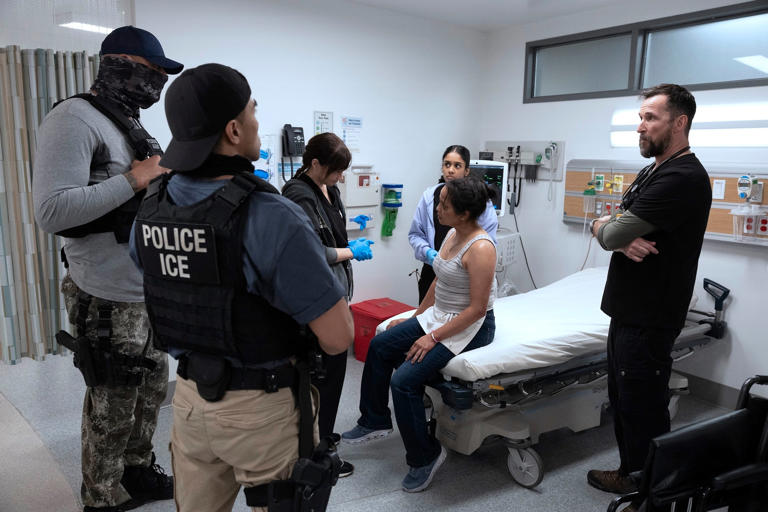
Under EMTALA, the Emergency Medical Treatment and Labor Act, a federal law, anyone who comes to an emergency department at a hospital that accepts Medicare or Medicaid funding has the right to be medically screened and stabilized for an emergency medical condition. That right applies regardless of citizenship status, immigration status, insurance, or ability to pay.
If you show up to the emergency room and need emergency care, the hospital cannot turn you away because of who you are.
What EMTALA Actually Requires
For viewers unfamiliar with healthcare, EMTALA does a few very specific (and very important) things:
- Hospitals must provide a medical screening exam to determine whether an emergency medical condition exists.
- If an emergency condition is found, the hospital must provide stabilizing treatment or an appropriate transfer.
- This obligation applies equally to everyone—documented or undocumented, insured or uninsured.
EMTALA exists precisely to prevent hospitals from refusing care to people they perceive as “undesirable,” whether for financial, legal, or social reasons.
Fear, and especially fear created by law enforcement presence, can function as a barrier to care just as effectively as a locked door. And that’s where the scene in The Pitt gets something very right.
Why the Scene Rings True
Hospitals are legally required to ensure access to emergency care. If patients leave, or if they never seek care in the first place because they are intimidated or afraid, that undermines the purpose of EMTALA.
Healthcare workers are trained to reduce barriers to care, not increase them. When Robby calls out the agents for frightening patients away, he’s articulating a real tension that hospitals navigate every day: balancing law enforcement activity with the obligation to keep emergency care accessible to the public.
From an EMTALA perspective, the right to emergency care doesn’t disappear because law enforcement is present.
An Important Nuance (Without Spoiling the Point)
EMTALA does not mean:
- Hospitals can interfere with lawful law enforcement activity
- Everyone is entitled to unlimited or non‑emergency care
- Immigration enforcement is prohibited inside hospitals
What EMTALA does mean is that emergency departments cannot allow fear, intimidation, or discriminatory practices to prevent people from receiving emergency evaluation and stabilizing treatment.
The show isn’t saying hospitals should obstruct ICE. It’s highlighting something more subtle and more real: when enforcement presence chills access to emergency care, patient rights are at risk.
Why This Matters Beyond TV
Scenes like this resonate because they reflect real concerns in real emergency departments. Many patients, immigrants and citizens alike, delay or avoid care when they fear legal consequences, financial ruin, or exposure.
EMTALA is one of the few laws in the U.S. that draws a bright line around emergency care and says: this part of healthcare is not optional, and it is not conditional.
So yes: Robby was right to be angry. And, the law backs him up.
 Help! Send Coffee!