Understanding and Valuing the Power of Quiet Individuals
In our fast-paced, collaborative world, introverts often find themselves navigating environments that don’t align with their natural preferences. This post explores the unique strengths of introverts in educational and professional settings, offering insights into creating environments where they can thrive.
What Does It Mean to Be an Introvert?
Introverts are individuals who gain energy from solitude and prefer deep, meaningful interactions over large social gatherings. They are often reflective, observant, and thoughtful, bringing a unique perspective to group dynamics.
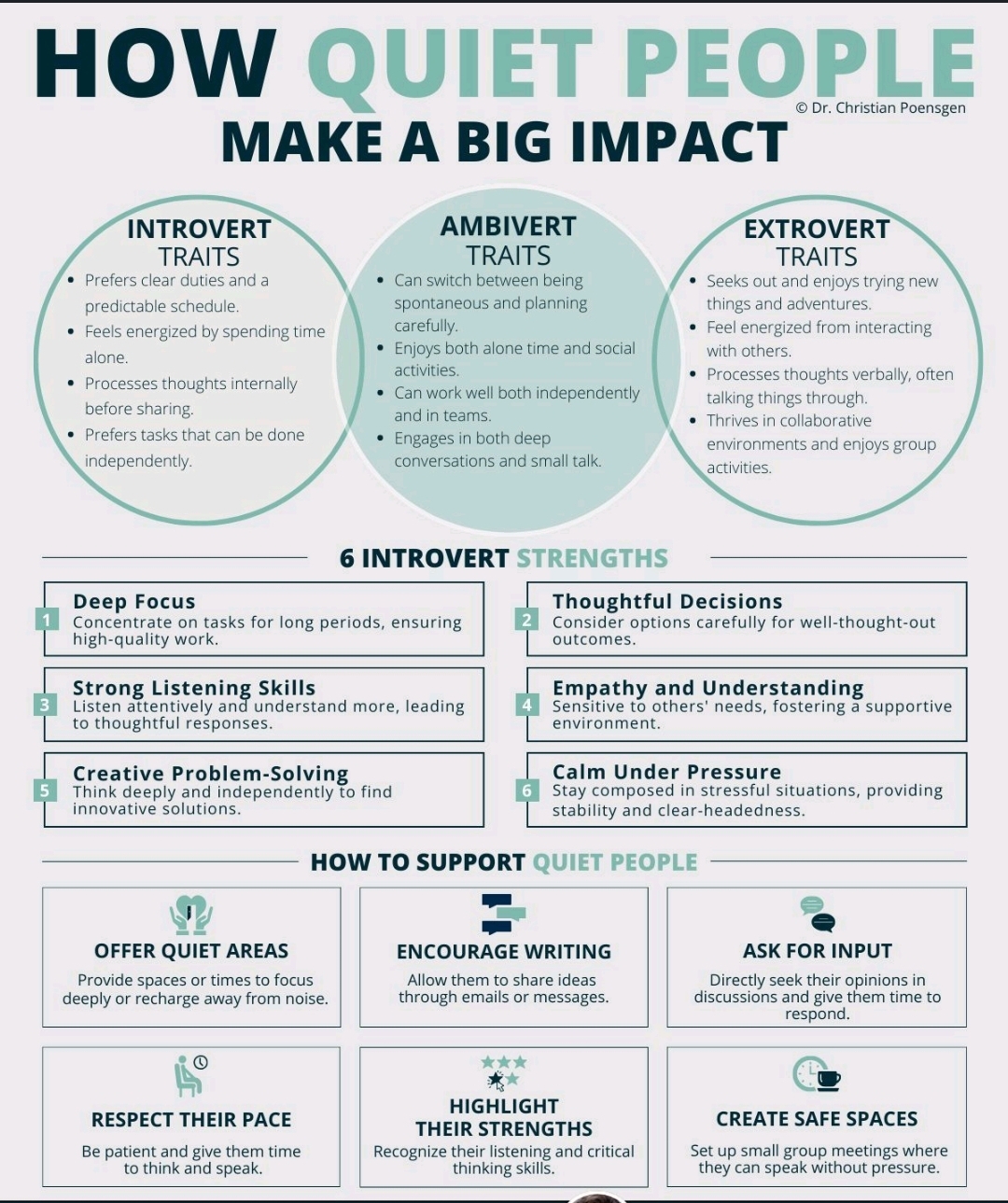
Dr. Christian Poensgen’s infographic, “How Quiet People Make a Big Impact,” visually encapsulates the strengths of introverts, highlighting traits such as:
- Strong Listening Skills: Introverts are attentive listeners, often picking up on nuances others might miss.
- Deep Focus: They can concentrate intensely on tasks, leading to high-quality outcomes.
- Empathy: Their reflective nature allows them to connect deeply with others’ emotions.
- Calm Under Pressure: Introverts often remain composed in stressful situations, providing stability to teams.
In the Classroom
Traditional educational settings often favor extroverted behaviors, such as quick verbal responses and group participation. However, this can inadvertently sideline introverted students who prefer to process information internally before sharing.
Research by Stewart (2019) emphasizes the importance of recognizing and supporting introverted students. Educators can:
- Provide Alternative Participation Methods: Allow written reflections or one-on-one discussions as alternatives to group activities.
- Create Quiet Spaces: Designate areas where students can work independently without distractions.
- Encourage Deep Thinking: Assign projects that allow for in-depth exploration of topics.
By acknowledging these preferences, educators can foster an inclusive environment that values all personality types.
In the Workplace
Modern workplaces often emphasize open communication and constant collaboration. While these can be beneficial, they may not cater to the strengths of introverted employees.
Jachimowicz et al. (2024) found that extroverted employees are more likely to be perceived as passionate, even when introverted colleagues are equally committed. This bias can lead to undervaluing the contributions of introverts.
To support introverted employees:
- Offer Flexible Work Arrangements: Provide options for remote work or quiet office spaces.
- Recognize Diverse Communication Styles: Understand that introverts may prefer written communication or smaller meetings.
- Value Depth Over Volume: Appreciate the thoroughness and thoughtfulness introverts bring to their work.
By creating an environment that respects different working styles, organizations can harness the full potential of their diverse teams.
At Home: The Need to Recharge
After a day filled with interactions, introverts often need time alone to recharge. This isn’t a sign of disengagement but a natural way for them to regain energy.
Family members and roommates can support introverts by:
- Respecting Alone Time: Understand that solitude is essential for their well-being.
- Communicating Openly: Discuss and set boundaries regarding social activities and downtime.
- Creating a Peaceful Environment: Design home spaces that allow for quiet and reflection.
Recognizing and accommodating these needs can lead to harmonious living arrangements and stronger relationships.
Final Thoughts
Introverts bring invaluable strengths to both educational and professional settings. By understanding and supporting their unique needs, we can create inclusive environments that allow everyone to thrive.
References
Poensgen, C. (2024). How Quiet People Make a Big Impact. In Linkedin.com. https://www.linkedin.com/feed/update/urn:li:activity:7315705060221480961/
Rand, B. (2024, February 16). Is Your Workplace Biased Against Introverts? Harvard Business School. https://www.library.hbs.edu/working-knowledge/is-your-workplace-biased-against-introverts
Stewart, J. (2019). Supporting Introverted Students. BU Journal of Graduate Studies in Education, 11(1). https://files.eric.ed.gov/fulltext/EJ1230340.pdf
 Help! Send Coffee!