AI panic has taken over a lot of academic spaces lately. You can feel it the moment you start writing something for a class. Instead of thinking about what you want to say, you start wondering how it might be interpreted. Not for clarity or quality, but for whether it “sounds like AI.” It’s an odd kind of pressure, and honestly, it’s exhausting.
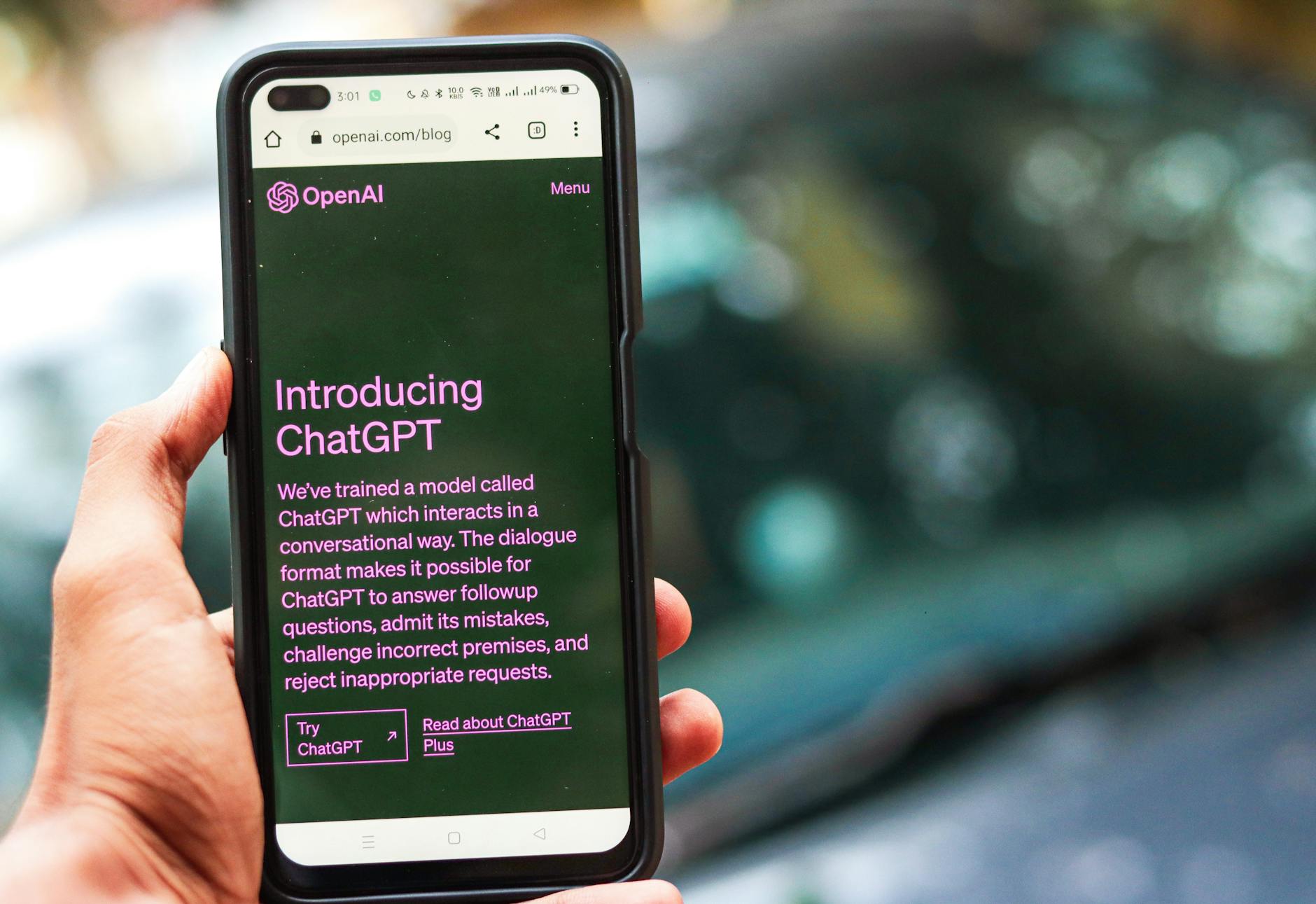
A big part of the problem is that many instructors were told to watch for vague “AI traits” in student writing. The trouble is that most of these traits are just normal human writing patterns. AI sounds structured and calm because it learned that from us. Our writing built those patterns in the first place. But now, when students write clearly or stay organized, it can trigger suspicion.
Several teaching and research groups have already raised the alarm about this. MIT Sloan called out how unreliable AI detectors are and shared examples of detectors marking real student work as machine-written. The University of Pittsburgh and Cornell University both warn instructors not to rely on these tools at all because of how inconsistent and biased they can be. And Stanford’s HAI group showed that some detectors are especially harsh on multilingual students, even when their work is completely their own. It’s unsettling how quickly normal writing can be misread.
Students feel the weight of all of this. You can see it in the way people second-guess their words before they post in a discussion, or when they start dumbing down their writing just to avoid looking “too polished.” Some are afraid to show improvement because improvement can look suspicious now. That fear doesn’t come from wrongdoing; It comes from a sense that someone is reading their work like they’re looking for cracks.
And for some students, the impact hits even harder. Adult learners who have years of professional communication experience are often the first to be flagged. They’ve written policy memos, patient letters, business reports, and training guides for most of their careers. Of course their writing sounds polished. Of course it’s structured. That’s a skill many of us have honed over the years of our careers. But in a climate of AI suspicion, skill can start to feel like something that needs to be defended.
The same happens with students who are further along in their programs. After several courses, they know what’s expected. They know the tone instructors want, how to cite sources, and how to present ideas in a way that feels polished. Their writing is supposed to get better, but the improvement itself gets questioned. It’s a painful message to receive. It tells students that growth is unsafe.
Research backs up these concerns too. Perkins and colleagues found that AI detectors become even less accurate as writing improves or becomes more nuanced. That’s not exactly comforting. It means the better someone writes, the more likely they are to be flagged by systems that weren’t built to understand context or personal voice.
Students should not have to shrink themselves to feel safe. They should not have to write below their own ability. And they should not have to worry that their real life experience is going to be treated like a violation.
If something feels different in a student’s work, the answer is a conversation, not a confrontation. A simple check-in almost always gives the clarity that a detection tool cannot. And more importantly, it preserves trust. Without trust, learning starts to break down. Students stop experimenting, stop growing, and stop showing the best of what they can do.
Over-scrutinizing for AI is not protecting integrity, it’s undermining it. It pushes students into survival mode instead of learning mode. And when students are scared to write in their own voice, everyone loses. Students deserve an environment where their voice is welcomed, not examined under a microscope, and they deserve instructors who read their work with curiosity, not suspicion.
References
Cornell University. “AI & Academic Integrity | Center for Teaching Innovation.” Teaching.cornell.edu, 16 Aug. 2023, https://teaching.cornell.edu/generative-artificial-intelligence/ai-academic-integrity.
MIT Management. “AI Detectors Don’t Work. Here’s What to Do Instead.” MIT Sloan Teaching & Learning Technologies, https://mitsloanedtech.mit.edu/ai/teach/ai-detectors-dont-work/.
Myers, Andrew. “AI-Detectors Biased against Non-Native English Writers.” Stanford HAI, Stanford University, 15 May 2023, https://hai.stanford.edu/news/ai-detectors-biased-against-non-native-english-writers.
Perkins, Mike, et al. GenAI Detection Tools, Adversarial Techniques and Implications for Inclusivity in Higher Education a Preprint. 2024.
University of Pittsburg University Center for Teaching and Learning. “Encouraging Academic Integrity – University Center for Teaching and Learning.” Pitt.edu, 2024, teaching.pitt.edu/resources/encouraging-academic-integrity.
 Help! Send Coffee!