Working With Personality – Post 3
When people think of extroverts in the workplace, the image that often comes to mind is of someone who thrives in team settings, loves to talk, and leads with confidence. And while there’s truth in that, being an extrovert isn’t just about being loud or social—it’s about how they process energy. Extroverts feel most alive when they’re engaged with others. But in today’s workplace, that doesn’t always play out as easily or advantageously as it might seem.
The Extrovert Advantage (And What That Really Means)
Extroverts bring a lot to the table. In environments that call for collaboration, public speaking, idea sharing, or team leadership, extroverts often feel in their element. Research from Wilmot and Ones (2019) shows that extraversion correlates positively with job performance, especially in roles that require interpersonal interaction and enthusiasm.
What extroverts tend to offer:
- Strong verbal communication and presentation skills
- Quick thinking in social settings
- Leadership presence and comfort with decision-making
- A willingness to initiate conversations, feedback, and collaboration
- Comfort with being visible
In leadership roles, these traits often make extroverts stand out. But they can also mask deeper challenges—both systemic and personal.
Are Modern Workplaces Built for Extroverts?
It’s a common belief that today’s offices—open-plan spaces, nonstop meetings, and real-time collaboration—are made for extroverts. And in some ways, they are. Open layouts and brainstorming-heavy cultures may suit those who think out loud or enjoy constant interaction.
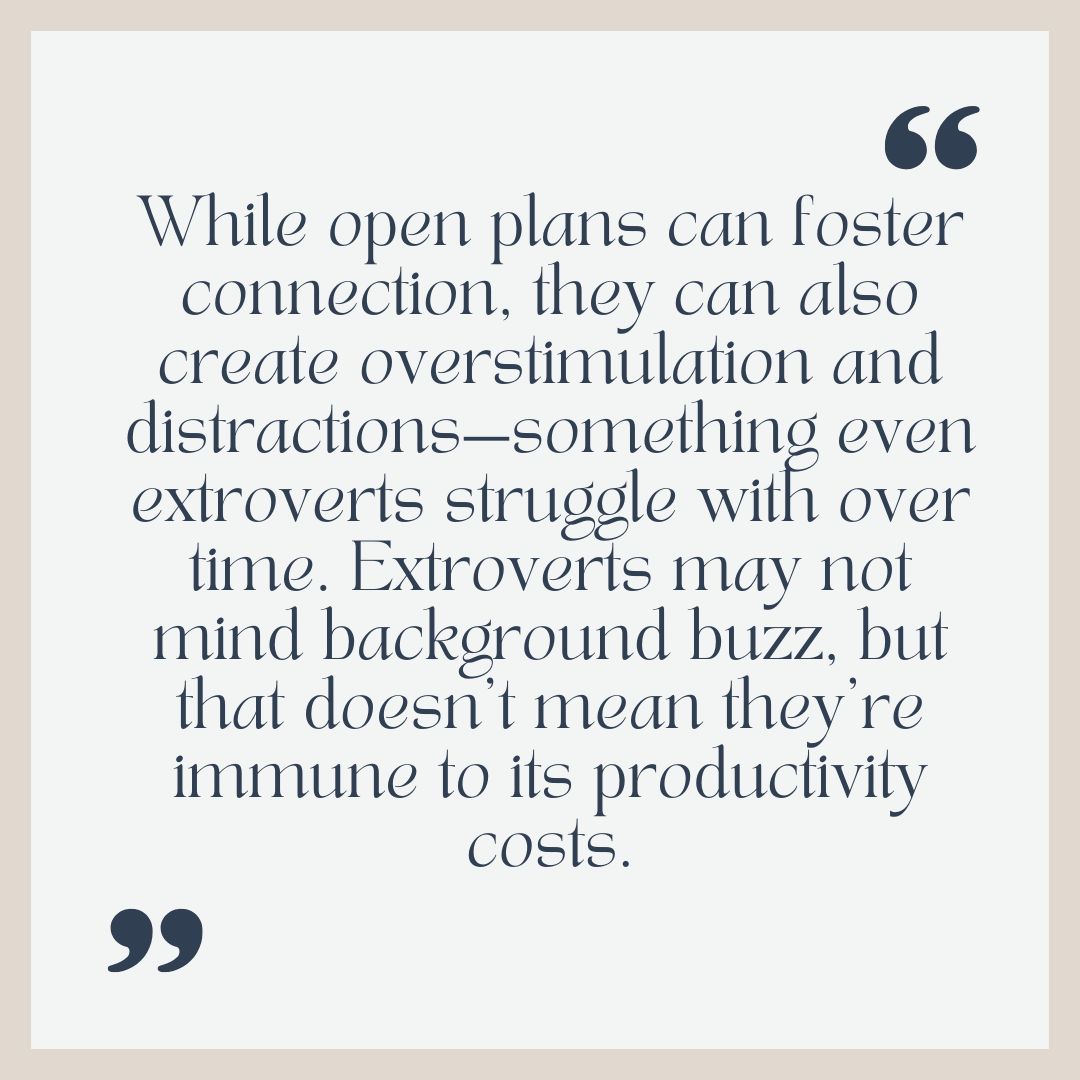
But workplace design is rarely perfect. According to WorkTech Academy, while open plans can foster connection, they can also create overstimulation and distractions—something even extroverts struggle with over time. Extroverts may not mind background buzz, but that doesn’t mean they’re immune to its productivity costs.
Research from JLL (2023) adds another layer: workplaces that offer a variety of zones—social areas, quiet pods, flexible meeting rooms—perform better overall. Extroverts may gravitate toward active spaces, but still need breaks. And not every “extrovert-friendly” workplace is built with that balance in mind.
When Being Extroverted Becomes Exhausting
Here’s the reality: Extroverts are not immune to burnout. In fact, our strengths—visibility, energy, availability—can become vulnerabilities when they’re constantly tapped without rest.
Common challenges for extroverts:
- Overcommitment: Always saying yes can lead to overload
- Emotional fatigue: Being “on” all the time wears down mental stamina
- Perceived dominance: Speaking first or most can unintentionally silence others
- Assumed resilience: People may forget that extroverts need support, too
A 2021 study by Herr et al. found that individuals with “resilient” personality profiles—marked by high extraversion, conscientiousness, and low neuroticism—reported the best work engagement and mental health outcomes. But it also showed that when job demands outweigh resources (like support and autonomy), even extroverts struggle. We thrive with structure, fairness, and growth opportunities—just like anyone else.
So What Helps?
For extroverts to really flourish, workplaces should foster balance, not just energy.
Here’s what makes a difference:
- Built-in recovery time: Space between meetings or tasks for reset
- Choice in collaboration: Flexibility to opt in or out of group settings when possible
- Inclusive dialogue spaces: Encouragement to listen and invite quieter voices
- Managerial awareness: Acknowledging effort, not just visibility
- Designated quiet areas: Yes, even extroverts need quiet zones
We can also support ourselves by practicing boundaries, recognizing when social energy runs low, and carving out time for solo focus—even if it feels counterintuitive.
Final Thoughts
Extroverts may feel at home in modern workspaces, but that doesn’t mean they don’t face challenges. The expectation to always engage, always contribute, and always lead can take its toll. And while we do bring energy, visibility, and drive to teams, we also need time, support, and space to refuel.
Workplaces that recognize the full spectrum of personality, not just the loudest traits, are the ones where everyone does their best work. Extroverts included.
References
Herr, R. M., van Vianen, A. E. M., Bosle, C., & Fischer, J. E. (2021). Personality type matters: Perceptions of job demands, job resources, and their associations with work engagement and mental health. Current Psychology, 42(5). https://doi.org/10.1007/s12144-021-01517-w
JLL. (2018, September 13). Can the modern office work for both introverts and extroverts. http://Www.jll.be. https://www.jll.be/en/trends-and-insights/workplace/can-the-modern-office-work-for-both-introverts-and-extroverts?utm_source=chatgpt.com
Westover, J. H. (2024, July 6). The Open Office – Collaboration Myth and How to Foster Real Impactful Collaboration. HCI Consulting. https://www.innovativehumancapital.com/article/the-open-office-collaboration-myth-and-how-to-foster-real-impactful-collaboration
Wilmot, M. P., Wanberg, C. R., Kammeyer-Mueller, J. D., & Ones, D. S. (2019). Extraversion advantages at work: A quantitative review and synthesis of the meta-analytic evidence. Journal of Applied Psychology, 104(12), 1447–1470. https://doi.org/10.1037/apl0000415
Zulfiqar, S., Khawar, M. R., Sarwar, B., & Huo, C. (2023). The role of personality type in overcoming workplace distractions. Journal of Innovation & Knowledge, 8(3), 100381. https://doi.org/10.1016/j.jik.2023.100381
 Help! Send Coffee!