Learning Isn’t Linear
If there’s one thing I’ve learned from years in training and now as a returning college student, it’s this: learning isn’t linear and certainly not one-size-fits-all.
Too often, training programs and academic environments are built around the assumption that if you just provide the information clearly enough, people will absorb it. But the truth is more complicated, and more human. People don’t just need information. They need access to it in a way that works for them. That means considering how people process, retain, and apply new knowledge based on various personal, professional, and neurological factors (CAST, 2018; Kiewra, 2021).
In this post, I want to explore the importance of understanding how people learn across school, college, and the workplace. When we meet people where they are, we don’t just help them pass a test or get through onboarding. We unlock their ability to thrive.
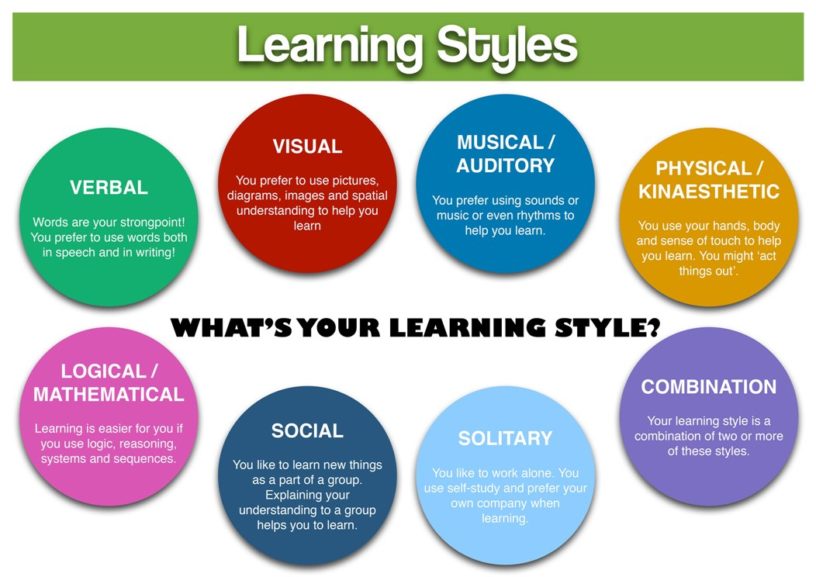
What Do We Mean by “Different Learning Styles”?
The idea of “learning styles” – visual, auditory, kinesthetic, and so on – has been widely discussed and sometimes misunderstood. Modern research urges us not to rigidly sort learners into categories, but to provide multiple means of engagement and information processing, a core principle of Universal Design for Learning (CAST, 2018).
This approach doesn’t mean customizing content for each person. It means building flexibility into how we teach and train, so learners can engage in ways that match their preferences and needs (Seaman, 2020). That’s what makes learning more accessible – and more effective.
My Learning Style – And Why It Matters
I learn best by doing. Put me in the environment, let me shadow, observe, ask questions, and try things hands-on — then I understand. Not only does this help me absorb the material, but it sparks something deeper. I start to look at how systems work, where the bottlenecks are, and how things can be improved.
This process-driven learning approach has shaped how I approach both school and work. In college, I often need to apply what I’m learning in a real-world context before it sticks. In training others, I’ve seen how much more confident employees are when they’ve been able to try something rather than just hear about it.
Understanding my learning preferences has helped me become a better student, trainer, and advocate for others who don’t necessarily thrive in traditional lecture-based environments.
What Happens When Learning Styles Are Ignored?
When organizations and schools ignore learning differences, it can cause real harm. Learners disengage, confidence erodes, and performance suffers — not because people lack ability, but because the system wasn’t built for how they learn (Office for Students, 2021).
In both academic and workplace settings, ignoring learning preferences can lead to:
- Reduced retention of new material
- Decreased motivation and morale
- Lower inclusivity and equity
- Higher turnover or dropout rates
Modern learning strategies recognize that how we deliver information matters just as much as what we’re delivering.
Practical Ways to Support Different Learning Styles
Designing with learning differences in mind doesn’t have to be complicated. Here are a few key practices that can make training and teaching more inclusive:
- Blended content: Combine videos, written materials, discussion, and hands-on practice.
- Self-paced options: Offer flexibility in timing and format when possible.
- Active learning: Use simulations, scenarios, or case-based tasks to apply learning.
- Feedback loops: Create opportunities for learners to ask questions, reflect, and adapt.
- Accessible design: Include transcripts, alt text, and screen reader compatibility from the start.
These practices align with both UDL guidelines and current best practices in instructional design (CAST, 2018; World Economic Forum, 2020).
Training Through a Human Lens
Training that’s truly effective is built on empathy. It acknowledges that learning something new is vulnerable work. And it provides the safety, structure, and flexibility people need to succeed.
The 2025 LinkedIn Workplace Learning Report highlights this shift: career development and skill-building are now directly tied to organizational performance. Organizations that prioritize learning flexibility and employee growth — described as “career development champions” — experience 57% greater internal mobility and 21% higher retention than their peers (LinkedIn, 2025).
Even more telling: 91% of L&D professionals say continuous learning is more important than ever for long-term career success. That means making learning engaging, human-centered, and accessible isn’t just “nice to have” — it’s a critical business strategy.
The Academic Side: What I’ve Learned Going Back to School
As an adult learner returning to college, I’ve had to rediscover what kind of learner I am. I’ve realized that I need time to process, to rewrite and reflect, to see examples in practice. And I need educators who are willing to mix it up, not just lecture, but provide readings, discussions, and hands-on case studies. (Something that doesn’t always happen in an asynchronous online format like my program.)
Some of my most valuable learning experiences have come from professors who made space for different learning approaches. When I feel included in how I’m being taught, I engage more deeply in what I’m being taught.
Just like in the workplace, academic success relies on recognizing and valuing learner differences.
Learning with Intention
At the end of the day, whether we’re in a classroom or a workplace, we’re all trying to do the same thing – learn and grow. That process is more effective, more empowering, and more equitable when we take time to understand how people learn best.
Learning with intention means designing for diversity, not for the average. And when we do that, we don’t just improve outcomes – we create spaces where everyone can succeed.
Recommended Resources
Books & Reports:
- CAST. (2018). Universal Design for Learning Guidelines Version 2.2. http://udlguidelines.cast.org/
- Kiewra, K. A. (2021). SOAR to College Success and Beyond. Cognella Academic Publishing.
- World Economic Forum. (2020). The Future of Jobs Report 2020. https://www.weforum.org/reports/the-future-of-jobs-report-2020
- LinkedIn Learning. (2025). 2025 Workplace Learning Report. https://learning.linkedin.com/resources/workplace-learning-report
Websites & Tools:
Podcasts:
- The EdSurge Podcast – Focuses on education technology and learner engagement
- The Learning Scientists Podcast – Evidence-based strategies for improving retention and learning
- Think Fast, Talk Smart – Communication-focused podcast from Stanford GSB, with many episodes on learning and information processing
References
CAST. (2018, August 31). UDL: The UDL Guidelines. Cast.org. http://udlguidelines.cast.org/
Kiewra, K. A. (2021). SOAR to College Success and Beyond. Cognella Academic Publishing.
LinkedIn Learning. (2025). Workplace learning report 2025. Learning.linkedin.com. https://learning.linkedin.com/resources/workplace-learning-report
Office for Students. (2020, September 2). Digital teaching and learning in English higher education during the coronavirus pandemic: Call for evidence – Office for Students. http://Www.officeforstudents.org.uk. https://www.officeforstudents.org.uk/publications/digital-teaching-and-learning-in-english-higher-education-during-the-coronavirus-pandemic-call-for-evidence/
World Economic Forum. (2020). The Future of Jobs Report 2020. World Economic Forum. https://www.weforum.org/publications/the-future-of-jobs-report-2020
 Help! Send Coffee!